
Performing Your Self-Scout
#TXHSFBCHAT July 26, 2023

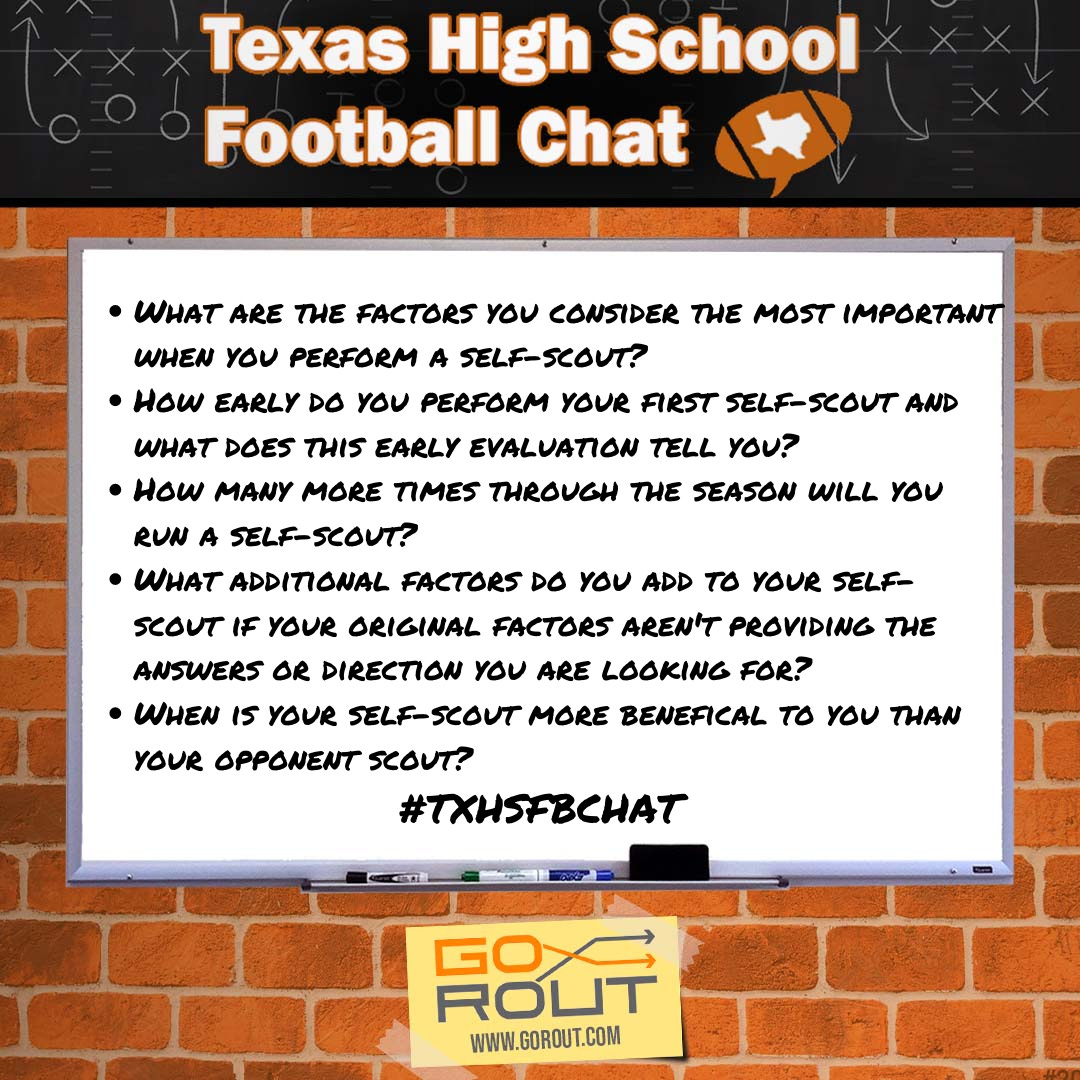
Taking a look at yourself, your unit, your play calling, and how it all impacts your overall performance is a very important evaluation process each season.
Q1: What are the factors you consider the most important when you perform a self-scout?
I agree here with Coach Johnson to take the passion out of it. True self-evaluation has to be done from a critically objective point of view. You may love a specific play or formation or stunt or player, but if you see that your standards and goals are not being met, then you have to be willing to make the necessary adjustments in order to be more successful.
If you are unable to remove yourself from the self-scout process, then have another person on staff run it. Somebody willing to examine the data and present it to you from an unbiased position.
Q2 and 3: How early and how many times throughout the season do you run your self-scout?
I think it’s important to run your first self-scout after your first two to three games. This timeframe gives you feedback on how well your initial install went. How well did you teach and your players learn the base components of your system, and are they able to execute on their own in a game.
Depending on how your season is divided, I believe it is important to run a scout after non-district play as well. For a lot of teams, this may coincide with the first self-scout of the season timeframe. For others, it may be your second.
The next self scout would be halfway through the district schedule, and then the last one run at the end of the regular season. The end of season one is beneficial as you enter the playoffs to make sure you know what your best plays are, and it is also great for those who don’t make it to the post-season to grade your performance.
Q5: When is your self-scout more benefical to you than your opponent scout?
This ties directly back to the first question of the chat. Coach Noonan and @TPT09 said it best, when you keep getting beat by the same things over and over again, or when you keep seeing and feeling like the team is it’s own worst enemy. At both points, you have to take time to address these issues and see where the problem lies in order to know where to begin to fix it.
We all grade our performances by different factors. The simple evaluation is the scoreboard, but as we all know, there is more to it than that. If you are not in the habit of running a self scout on your team, I encourage you to try it this season.
What are your self-scout factors?
Thanks for reading. If you enjoy this, please leave a comment and share it with more coaches.